THE EVIDENCE-BASED SHORTCUT TO STRENGTH

Build strength without making fitness a second job.

Your AI Personal Trainer that runs a deliberately brief, controlled, progressive strength protocol — slow cadence, time under load, evidence-led progression.

Sessions in this protocol commonly run about 12 minutes. That's a typical length, not a guaranteed dose — the app adapts to your experience, recovery and equipment.

One tap with Google. All Pro features unlocked during the beta. No card.

On Android? Join the Android beta — closed testing on Google Play, places limited.

per week
~12 min
typical session
5 exercises
1 set each
Auto-progression
every session
30+ yrs
of clinical research
The problem nobody talks about

You are not running out of time. You are running out of muscle.

01

About 1 in 4 adults over 65 falls each year. Most never fully recover.[src]

02

From your thirties onward, muscle mass declines decade after decade. Silently.[src]

03

Grip strength is one of the strongest simple predictors of long-term mortality risk in large cohort studies.[src]

04

Losing lower-body strength is closely tied to losing everyday independence, and supervised strength training has improved both in older adults.[src]

05

8 weeks of supervised high-intensity strength training rebuilt strength and mobility in adults aged 86–96. Age is not the barrier. Inaction is.[src]

your 80

What everyday life
feels like at 80

If your max is low, a laundry basket is a max effort. Drag to see where you're headed.

An older man on one knee pushing himself up from the floor with a hand on a sofa, with an illustrative effort indicator beside him.

Getting up from the floor

Getting up from the floor

Your strength capacity15 kg
FrailVery strong
  • Getting up from the floormax effort
    100% of your max effort
  • Carrying a laundry baskethard
    53% of your max effort
  • Groceries from the carhard
    67% of your max effort
  • Picking up your grandchildmax effort
    80% of your max effort
  • Lifting a carry-on overheadhard
    73% of your max effort
  • Climbing stairs without restnot happening
    beyond your capacity

Most tasks are manageable, but a few still push your limit. More reserve means more life.

A brief, progressive strength session can help build strength reserve. Frequency should match recovery, experience and medical context. That's the premise behind Intense Fit.

The science, plainly

Why controlled effort can be enough.

As a hard set continues and fatigue rises, the body progressively calls on more of the available motor-unit pool to keep the weight moving. That's why a small amount of well-executed, high-effort work can be a meaningful stimulus, without needing to reach momentary failure. Higher muscular strength is consistently associated with lower all-cause mortality in large cohort studies[src].

See the research →
An AI coach in your pocket

The strength coach who reads the research so you don't have to.

Intense Fit's AI reads your last session, your recovery inputs, your training history and your weakest lift, and recommends when to train those muscles again. It suggests the weight, calls the tempo, and watches every rep through your camera, tracking cadence and time under load so you can see how hard the set actually was. A short session, typically about 12 minutes, with much less guesswork.

It calibrates to you, your age, training experience, injury limitations and starting strength, so the first session already fits whether you are new to machines or coming back after years away.

Read the full philosophy →
CHEST PRESS · 1 / 5
52.5kg ↑ from 50
▶ START SET
TIME UNDER LOAD
01:14
● IN TARGET ZONE
60sTARGET90s
BAR STOPPED MOVING
● EFFORT LOGGED
Hold the contraction 5 more seconds. Then release slowly.
✖ LOG FAILURE
RECOVERY BRIEF
Next: Tue · 8 days
  • ● 8 hours of sleep tonight
  • ● 130g protein/day until then
  • ● Walk, don't lift
How Intense Fit works

A workout you can do in a lunch break.

01

Pick the Big Five

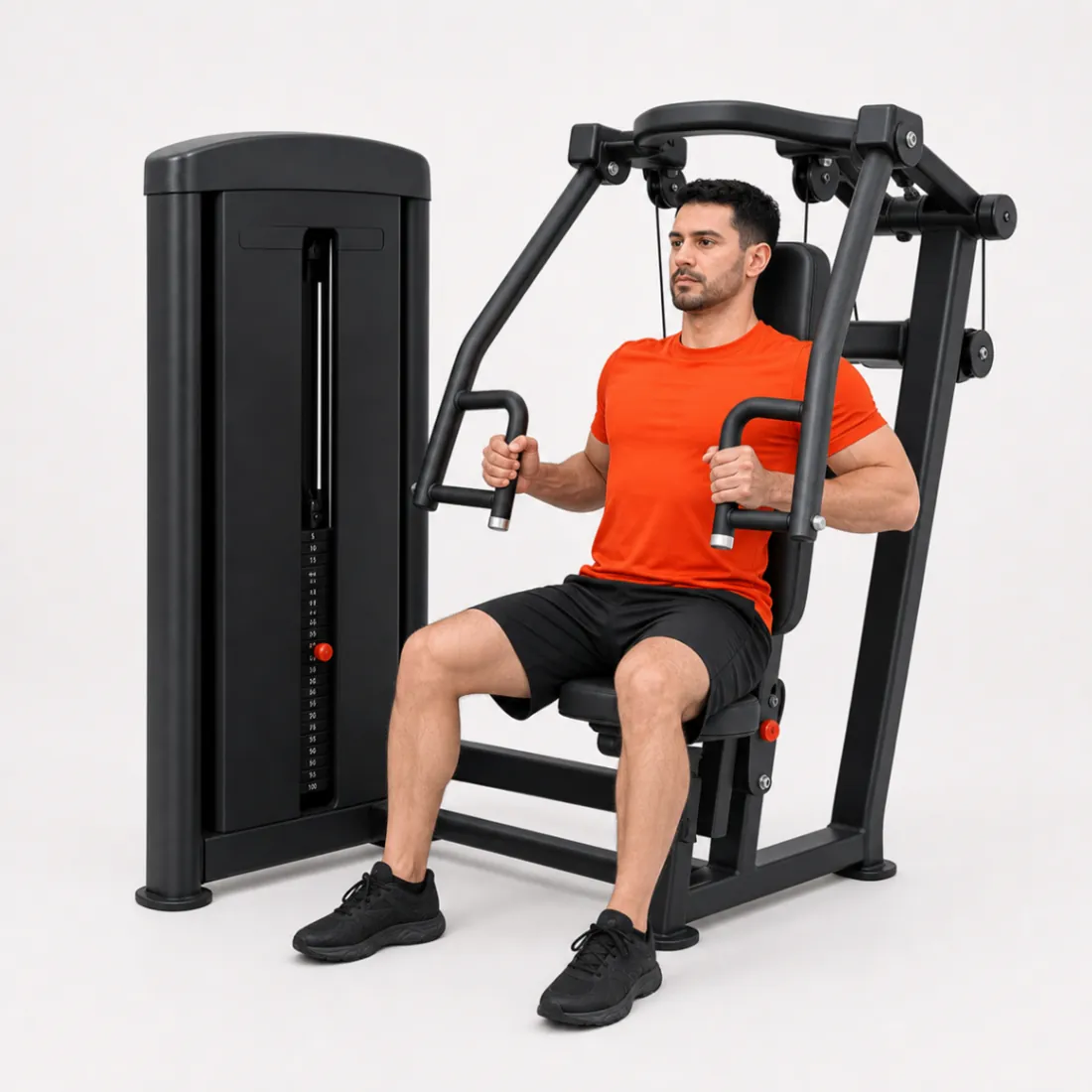
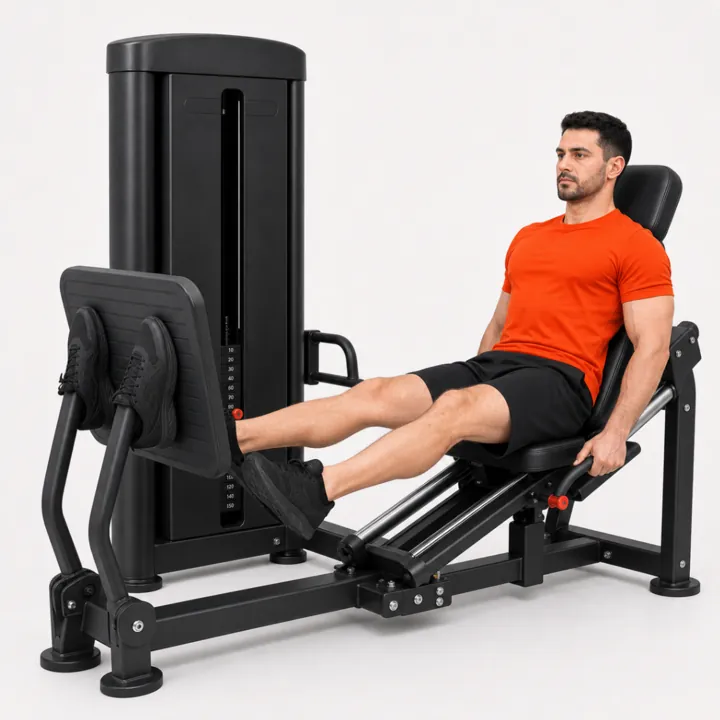
Chest press, pulldown, overhead press, seated row, leg press. Or substitute compounds you can do safely.

02

Slow it down

The app guides you through 10-second lifts and 10-second lowers. Smooth, controlled, no momentum.

03

Train with controlled effort

Keep going while your cadence and form hold, so effort stays high and technique stays intact. Intense Fit tracks time under load and guides when to stop. Reaching failure is optional context, not a requirement.

04

Recover, log, repeat

One week off. Intense Fit remembers your weights, your reps, your progression. And notifies you the moment you're ready again.

Inside the app

Every set, measured. Every session, decided.

TIME UNDER LOAD
01:14
● IN TARGET ZONE
Workout screen
TUL timer with voice coaching
NEXT: CHEST PRESS
52.5kg ↑ from 50
You hit 82s last week at 50kg. +2.5kg this session.
Progressive overload
Auto-calculates your next weight
LEG PRESS · 17 MONTHS
+47% in 17 months
Strength curve
See your progress over time
RECOVERY BRIEF
Next: Tue · 8 days
  • ● 8 hours of sleep tonight
  • ● ~130g protein/day
  • ● Walk, don't lift
Recovery brief
Tells you exactly when to come back
ANDROID CLOSED BETA

Test Intense Fit before the public launch.

Run real workouts, tell us where the experience gets in your way, and help shape the Android release. Apply with the Google account you use on your Android phone.

Applications open
Apply for beta access
Free during testing · No payment card · No positive review requested
1Apply
2Receive the Play invite
3Install and train
Get it on Google PlayClosed testing via Google Play
TIME UNDER LOAD
01:14
IN TARGET ZONE
Chest press · 52.5 kg
Workout screen
RECOVERY BRIEF
Next: Tue · 8 days
  • Sleep is your main recovery lever
  • Protein across the day
  • Walk, don't lift
Recovery brief
A tale of two trainees

Same goal. Two completely different bets.

The grinder
Mark, 42
5 hrs / week
  • -Hits the gym 4 days a week. Runs another two.
  • -Drives to the gym, changes, warms up, lifts, showers, drives home. 75 minutes a session.
  • -Sore most mornings. Knees ache. Lower back is a coin flip.
  • -Plateaus every six months. Drops out twice a year for ‘rest’.
  • -In ten years he'll be tired of it. In twenty, he'll have stopped.
Time spent per year≈ 260 hrs
The Intense Fit trainee
Alex, 42
One session / week
  • -One slow, focused session a week. A handful of exercises. In and out.
  • -No cardio plan. No split routine. No supplements.
  • -Strength climbs every single week. Measurably, in the app.
  • -Fully recovered before the next session. No injuries, no plateau.
  • -In twenty years she's still adding weight to the bar.
Time spent per year≈ 10 hrs

Mark isn't lazy. He's been told more is more. The science says otherwise. And has for thirty years.

Why I built this

I hated the gym. Then I read one book. And started treating my body like a spreadsheet.

. Filipe Meunier, founder of Intense Fit

● Free forever · Pro is optional

The core tracker is free forever. No card, no trial timer. Pro unlocks coach cues and form analysis if you want them — but you never have to pay to use Intense Fit.

I hated the gym until I read one book — Body by Science by Dr. Doug McGuff. For the first time someone treated training as a controlled biological stimulus: one brief session, full recovery, measured progression. A protocol you could prove or disprove.

MEASURED RESULTMY OWN LOG · BIG 5, 1×/WEEK
Biggest leap: Leg Press 71.5 kg → 105 kg (+47%) in 17 months, training once a week.
Leg Press
71.5 kg 105 kg
+47%
17 months · 1×/week
Chest Press
40 kg 82.5 kg
+106%
11 months · 1×/week
Seated Row
55 kg 91 kg
+65%
Same cadence. No steroids.
Big 5 workout log spreadsheet showing 17 months of tracked sessionsLeg Press column
My raw log — every set, every second under load, every week.
Today's workout improvements showing Leg Press at 105 kg105 kg
Today's target, auto-computed from last week.

Real screenshots from my own spreadsheet — the same logic now lives inside Intense Fit, so you don't need the spreadsheet.

I started with the leg press at 71.5 kg. Seventeen months later, one set a week, I was pressing 105 kg. No supplements, no five-day split. Just the protocol, logged.

The spreadsheet got unmanageable, so I built Intense Fit. It's the app I wished I'd had on day one.

Read the full story →

The HIT coach in your pocket

Every set, reviewed.

A HIT coach that helps you review how you move.

Most coaches watch. Most apps don't. Intense Fit records each set automatically so you can review your tempo, depth and form between sessions — and catch the one technical breakdown you never felt happening. No guesswork. No wondering if you're actually doing it right.

Automatic set recordingCadence reviewForm analysisSession replay
Unedited beta notes

What people actually said.

Copy-pasted from emails, the beta chat, and the post-session survey. Names shortened, everything else left as it came in.

email, week 3

20 years of HIT in a spreadsheet. deleted it after two sessions on this.

Marco, 54 — Porto
beta chat

chest press went from 40 to 55kg in about a month. once a week. I keep waiting for the catch.

Tom, 38 — London
survey

First time an app didn't try to sell me a six-week shred. it just runs the protocol and shuts up.

Beta tester, 61
email

the timer + the voice is the whole thing. I finally know what failure actually feels like.

Aoife, 42 — Dublin
beta chat

my dad's 71 and using it. he texts me the weight after every session now, unprompted.

R., 39 — Berlin
The hypertrophy app for HIT

Built for hypertrophy, not vanity metrics

Most workout apps log tonnage and streaks. Intense Fit tracks load, time under load, cadence, range of motion and repeatability together, so a set can be compared with the one before it. Time under load is a useful session metric, not a standalone guarantee of hypertrophy. Every session, every movement.

The progressive overload app, automated

Progressive overload, written for you each week

Complete your time-under-load target with stable form and controlled cadence, and the app proposes more load next session, weighing your recovery and recent sessions. Fall short, or lose control of the tempo, and the weight holds. Failure is not required. No spreadsheets, no deload weeks pulled from a forum — Intense Fit runs the rule for you.

Watch

Why lower-frequency training can work.

How often you train depends on dose, recovery and experience. Tap any clip to unmute and hear the story at real speed.

Common questions

Honest answers, no hedging.

Can a session this short do anything?+

For many trainees it can, when the working sets are hard and well executed. Multiple supervised studies, including the data summarised in Body by Science, report meaningful strength gains from single-set training with a much smaller time commitment than multi-set programmes. Effort and execution matter more than duration, and results vary with experience, recovery and consistency. Your first sessions may run closer to 20 minutes while you learn the cadence; about 12 minutes is a typical length after that.

How will I know it's actually working?+

Mainly by the weight on the bar over time. Intense Fit graphs your load and time under load for each of the Big Five, session over session. If the curve trends up while your cadence and form hold, the training is working. Many users see measurable strength signals within their first few completed sessions, assuming consistent effort, accurate logging and adequate recovery.

How long until I see results?+

Most users should expect measurable strength signals within their first 3–4 completed sessions, assuming consistent effort, accurate logging, and adequate recovery — your nervous system learns to recruit more fibres early. Visible muscle change: 8–12 weeks. Posture, walking confidence, the feeling of being solid on your feet: usually inside a month. The scale is the slowest and least useful signal. Ignore it.

What exactly should I track? I don't want to turn into a data nerd.+

Two numbers per exercise: the weight, and the time under load for the set. That's it. Intense Fit logs both in about fifteen seconds, alongside your cadence and range. Heart rate, calories and step counts tell you far less about whether you're getting stronger.

How do I know I'm working hard enough without a trainer?+

A useful endpoint is the last rep you can complete with your cadence and range intact — technical failure. Pushing beyond that, all the way to momentary failure, is optional context rather than a requirement, and it isn't appropriate on every lift or for every trainee. The slow cadence and on-screen guidance make the endpoint far easier to judge than counting reps.

What if I skip a week. Does that ruin progress?+

No. One week off is recovery, not regression, and two weeks off is usually fine too. A low-frequency protocol is designed around life happening: travel, illness, a hard work stretch. Intense Fit picks up where you left off instead of punishing missed days.

Why do most people quit tracking within six months?+

Because most trackers measure the wrong things and demand daily attention. Intense Fit asks for two numbers per exercise and shows you a strength line you can actually read. That feedback loop is why many HIT trainees stay with this style of training for years.

I'm 65. Is this safe?+

Slow-cadence resistance training is one of the safest forms of exercise. There's no momentum, no impact, and no eccentric overload. The American College of Sports Medicine recommends progressive resistance training as the single most important exercise modality for adults over 60.

Do I need a gym?+

Ideally yes, but not necessarily a fancy one. The Big Five maps cleanly onto any commercial gym with selectorised machines. We're also building a bodyweight track for travel weeks.

Will I lose weight?+

Intense Fit is a strength protocol, not a weight-loss programme. That said, more muscle means a higher resting metabolic rate, and many users report fat loss as a natural side-effect when nutrition is in order.

One focused session at a time.

Strength is built session by session, and it responds to consistent, controlled work. Start with one.